Understand the Universe
Study the birth and evolution of cosmic structure—from the early Universe to stars, galaxies, planetary systems and black holes.
HARK COSMOS LABS is building toward a future where artificial intelligence, advanced computing and rigorous science accelerate space exploration and deepen humanity's understanding of the Universe.
To advance humanity's understanding and exploration of the Universe through the convergence of astronomy, astrophysics, cosmology, mathematics, artificial intelligence and advanced computing—while developing intelligent technologies for space missions, astronomical discovery and the long-term advancement of a spacefaring civilization.
Study the birth and evolution of cosmic structure—from the early Universe to stars, galaxies, planetary systems and black holes.
Create resilient AI-enabled software for telemetry, mission operations, scientific data processing and autonomous decision support.
Explore how science, computation and intelligent systems can help humanity progress toward a durable spacefaring future.
Our commercial technology direction starts with software: high-reliability distributed systems, real-time data, AI-assisted operations and scientific computing for the growing space economy.
Java, Spring Boot, Python, microservices, secure APIs, Kubernetes and infrastructure-as-code for cloud-native mission workloads.
Kafka and Apache Flink pipelines for telemetry ingestion, event-time processing, correlation, anomaly signals and operational insight.
AI/GenAI, retrieval systems and scientific agents designed to assist—not obscure—human reasoning with traceable evidence.
An AI-native mission intelligence platform envisioned to transform spacecraft and mission data into timely, explainable operational insight.
Our long-horizon research vision spans observational astronomy, theoretical astrophysics, cosmology, mathematical physics and the search for life and intelligence beyond Earth.
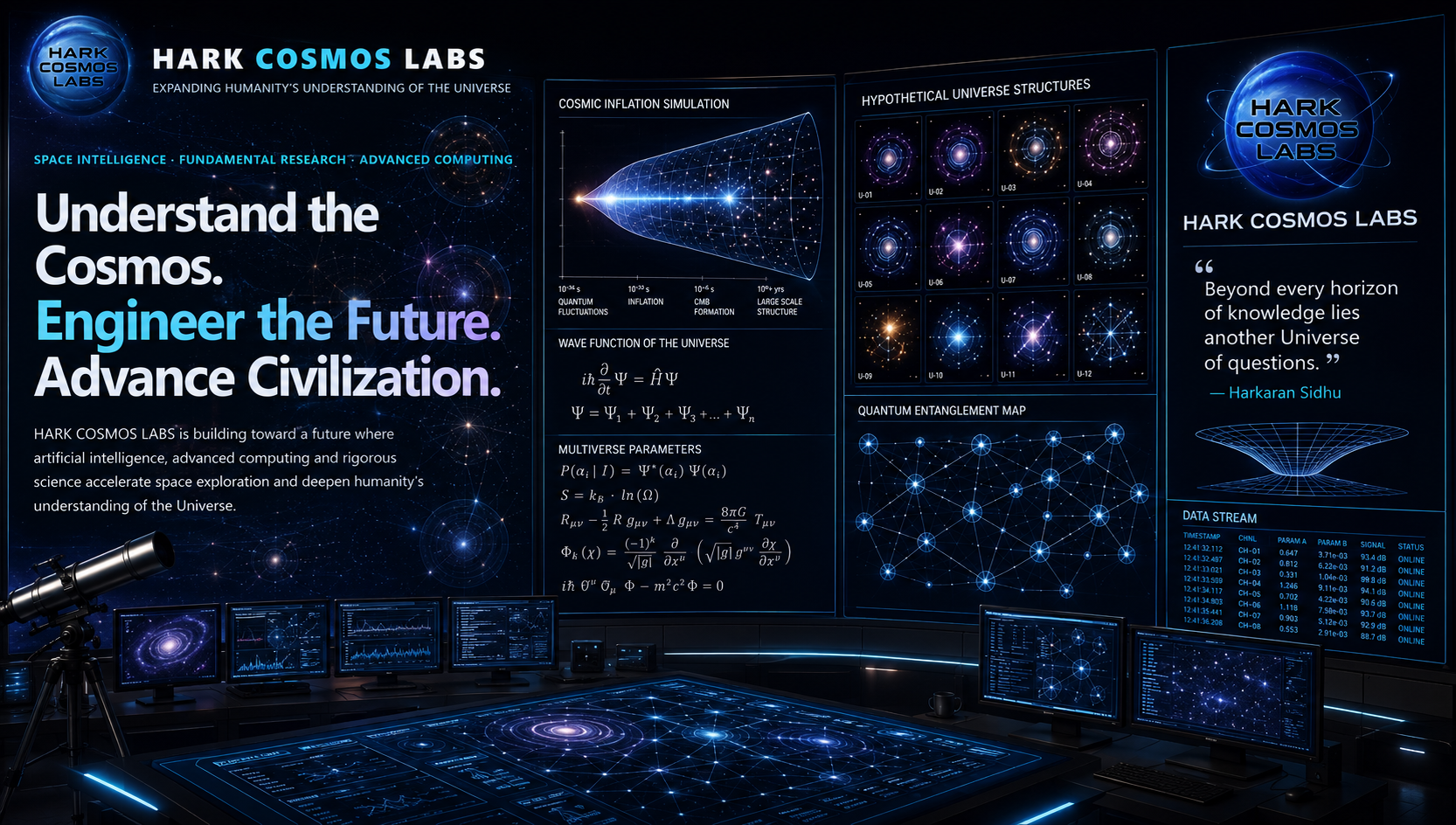
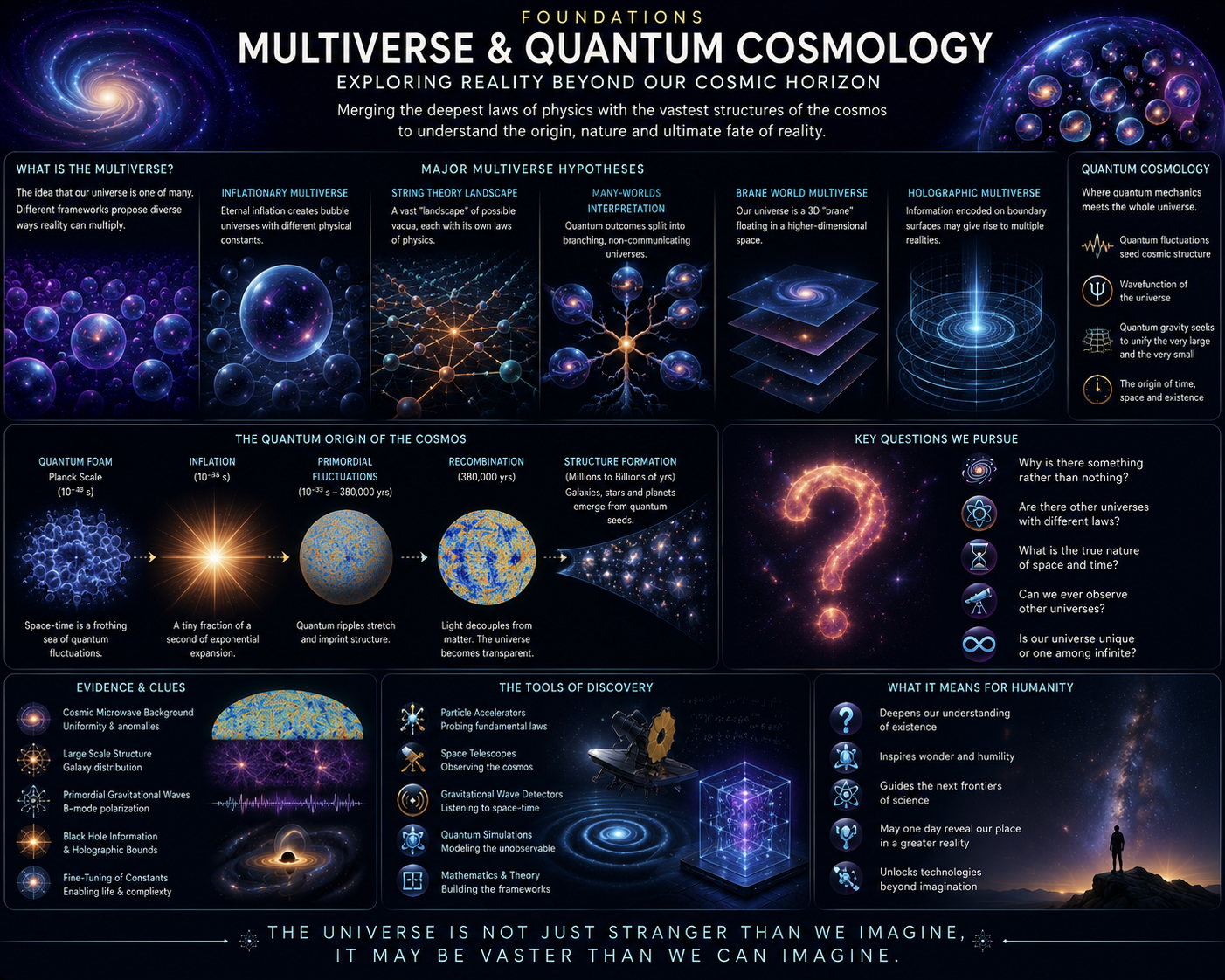
HARK COSMOS LABS explores theoretical questions involving cosmic inflation, bubble universes, quantum cosmology, possible multiverse structures and the mathematical foundations of cosmological models. These concepts are investigated as theoretical possibilities rather than established observational discoveries.
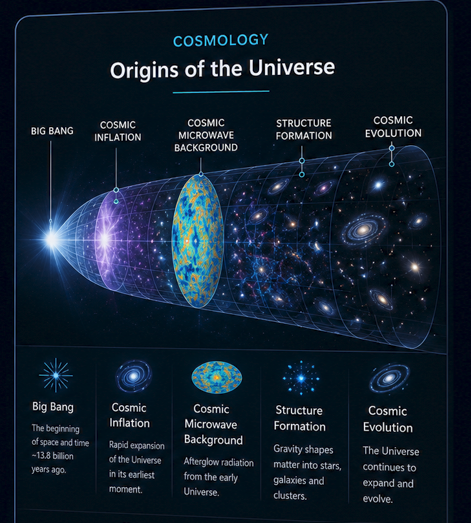
Big Bang cosmology, cosmic inflation, nucleosynthesis, the cosmic microwave background, structure formation and cosmic evolution.
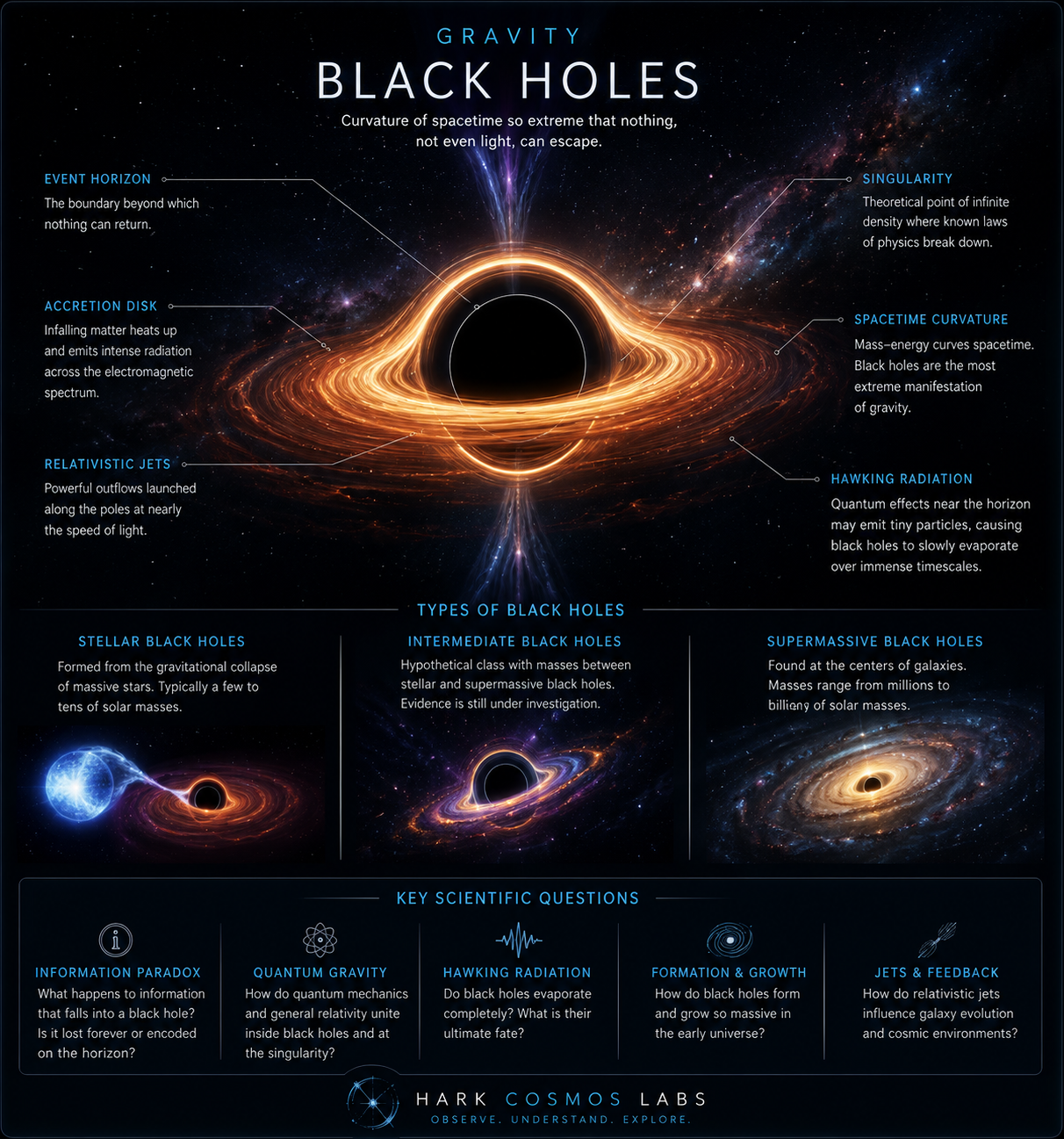
Stellar, intermediate and supermassive black holes; horizons, accretion, relativistic jets, Hawking radiation and the information problem.
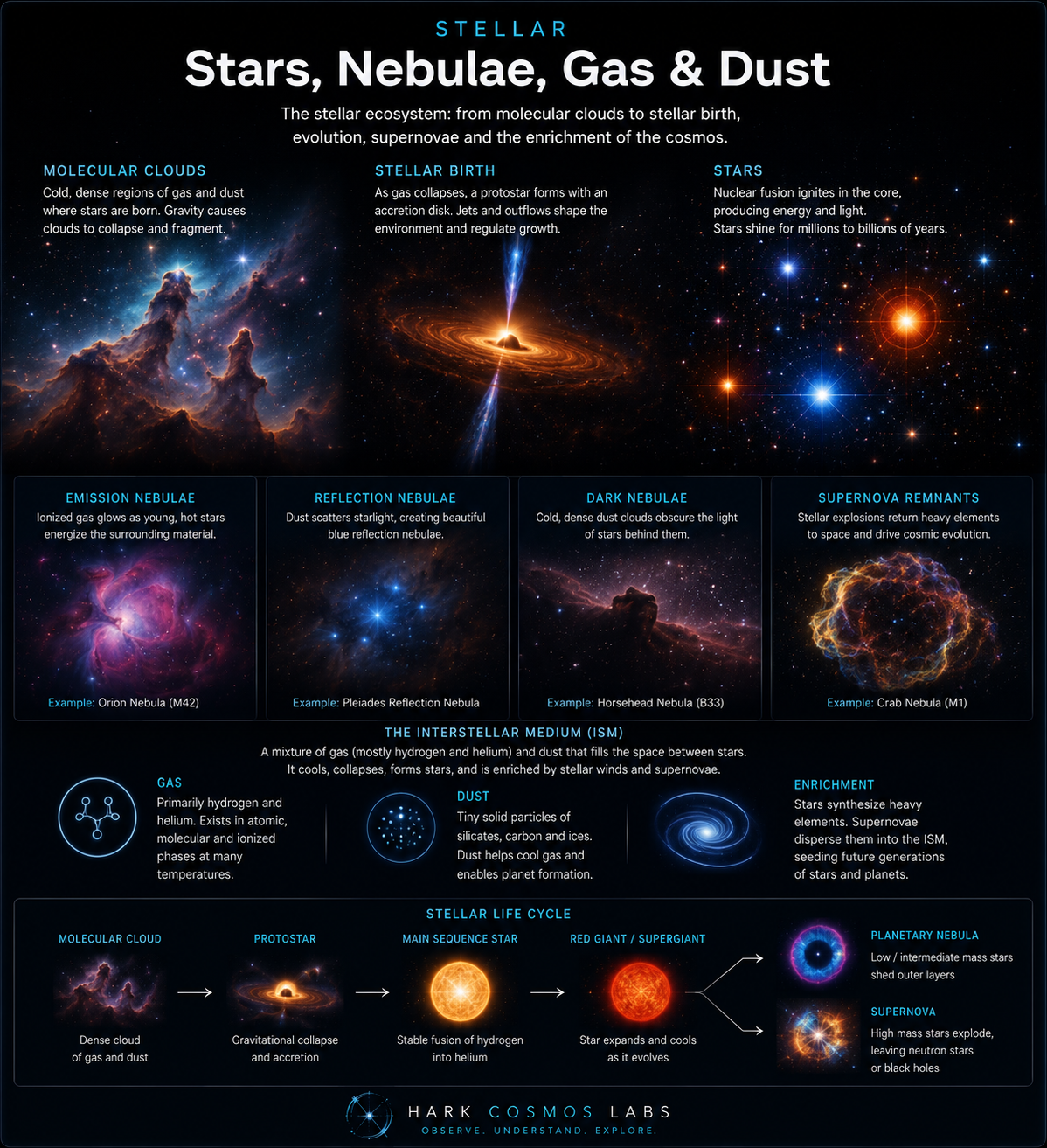
Molecular clouds, stellar birth and evolution, emission, reflection and dark nebulae, supernova remnants and the interstellar medium.
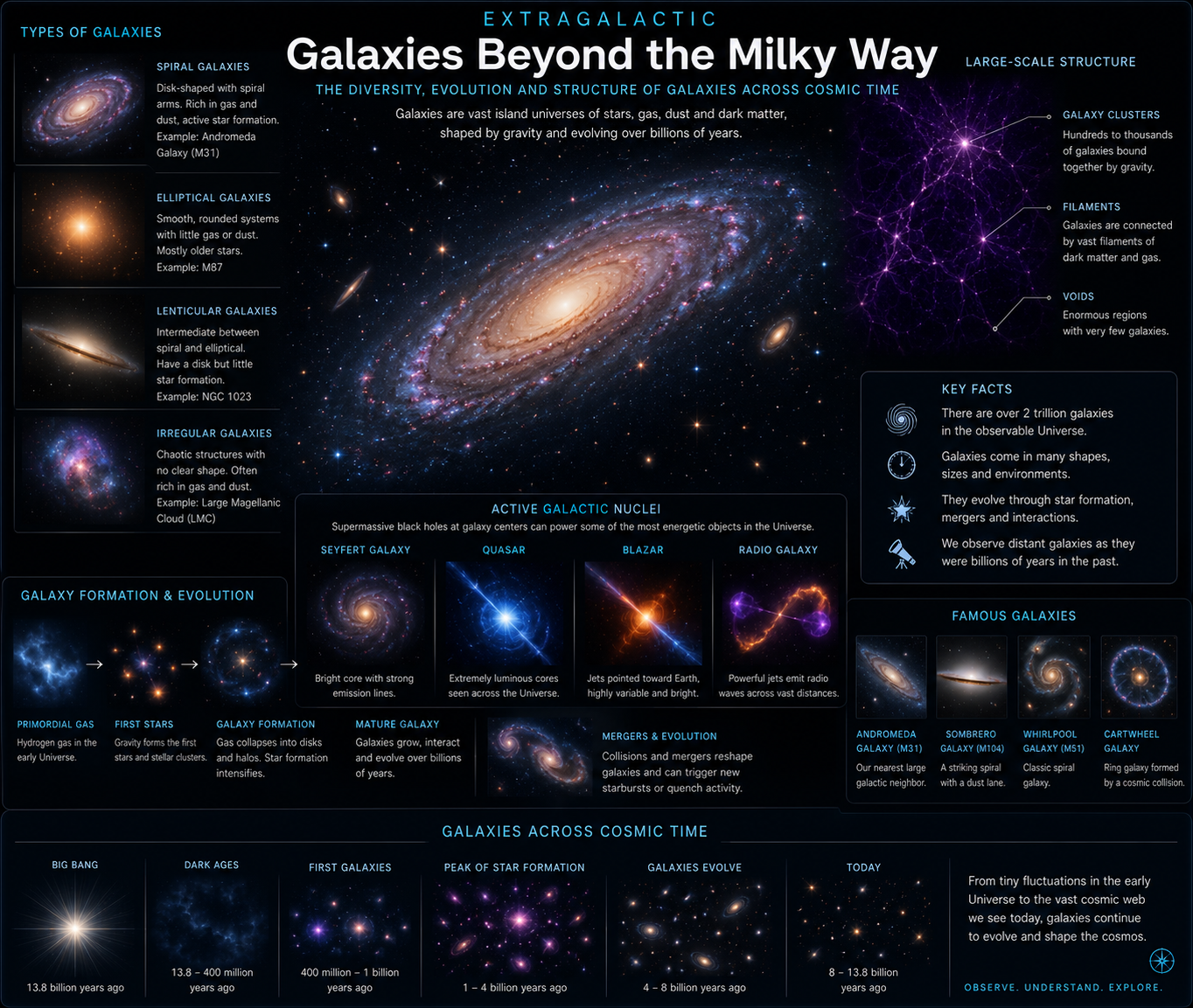
Galaxy formation and evolution, gas and dust, active galactic nuclei, quasars, mergers, clusters and large-scale structure.
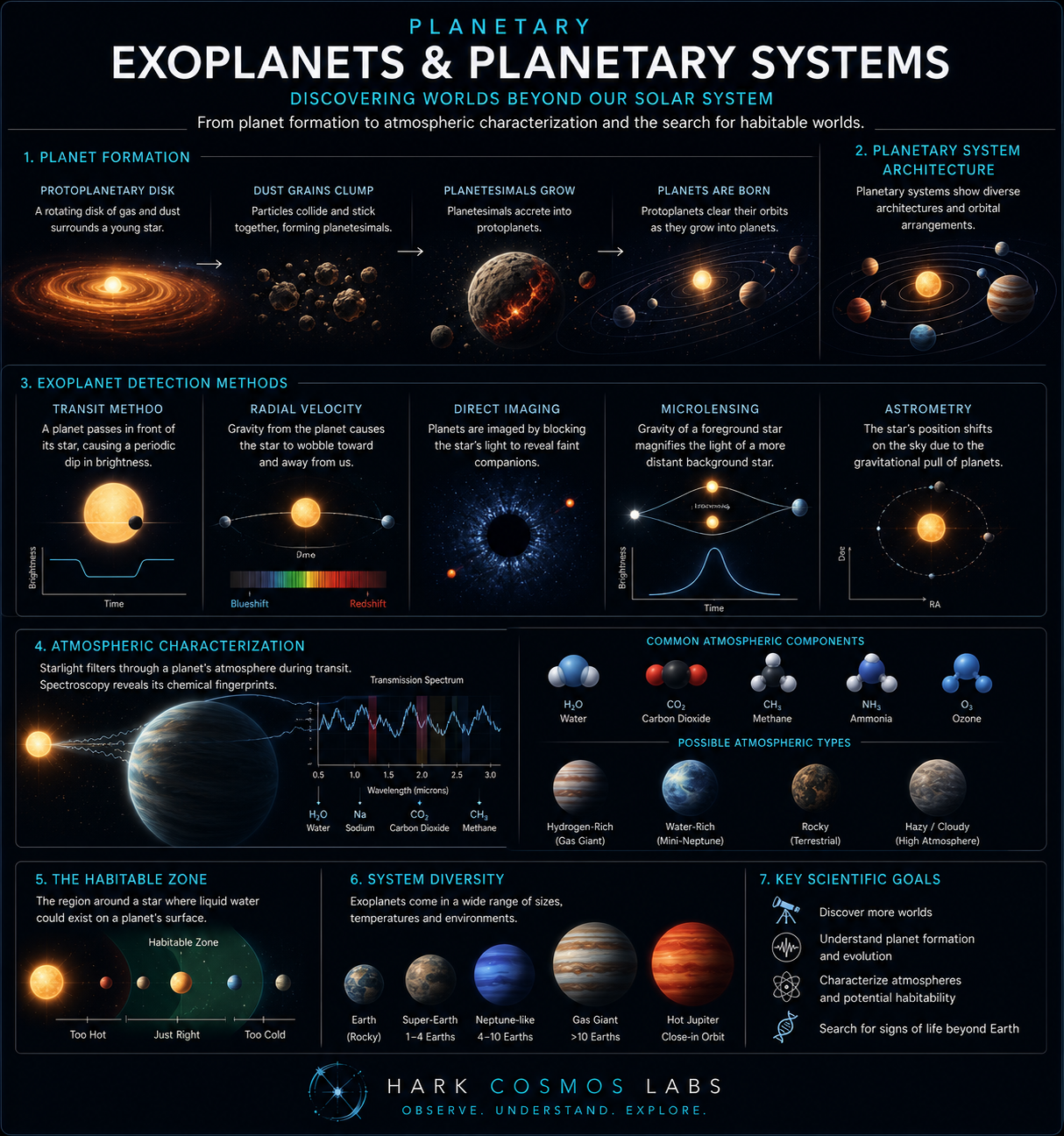
Planet formation, protoplanetary disks, orbital systems, atmospheric characterization, habitability and planetary evolution.
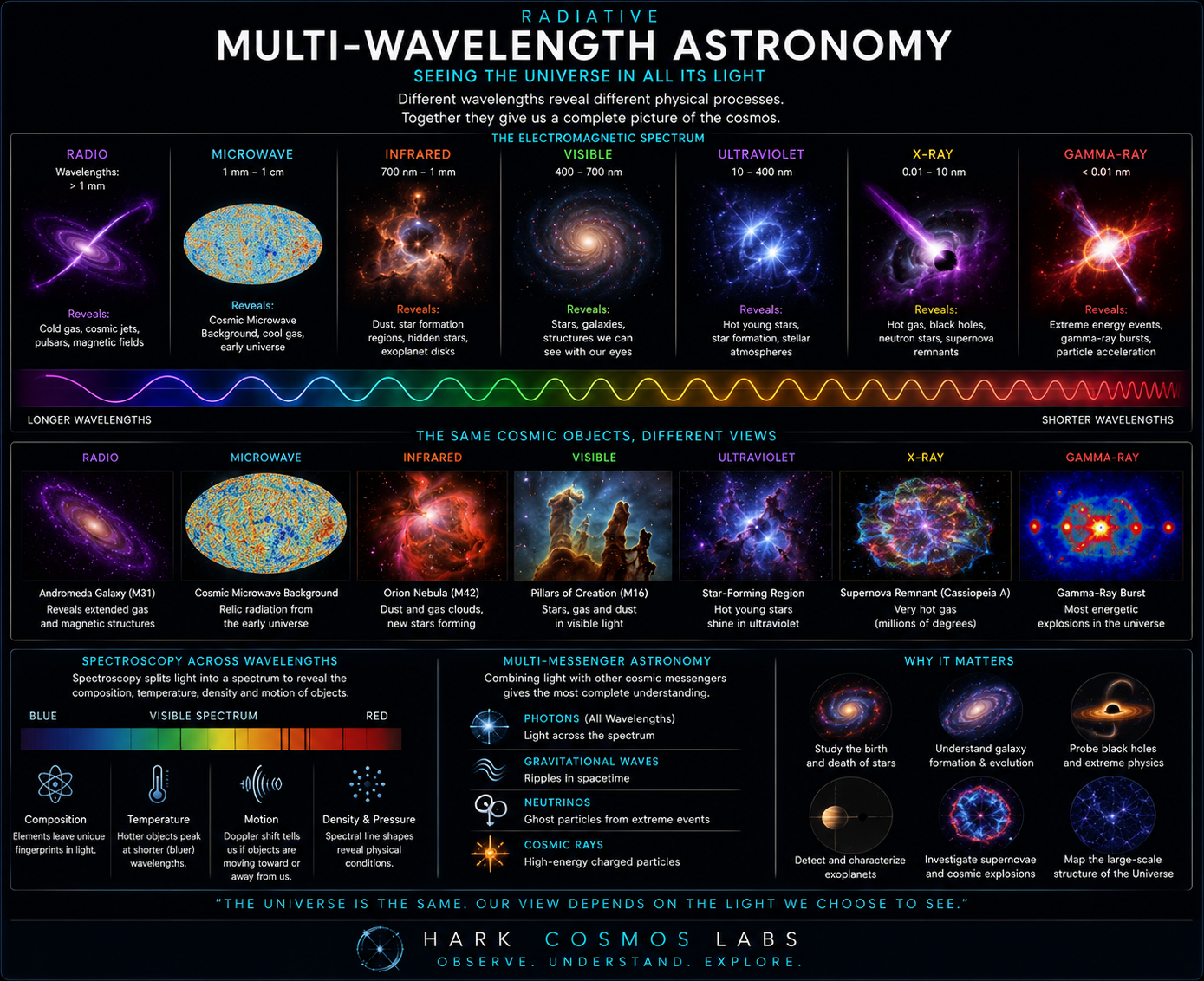
Radio through gamma-ray astronomy, spectroscopy and multimessenger approaches combining photons, gravitational waves and neutrinos.
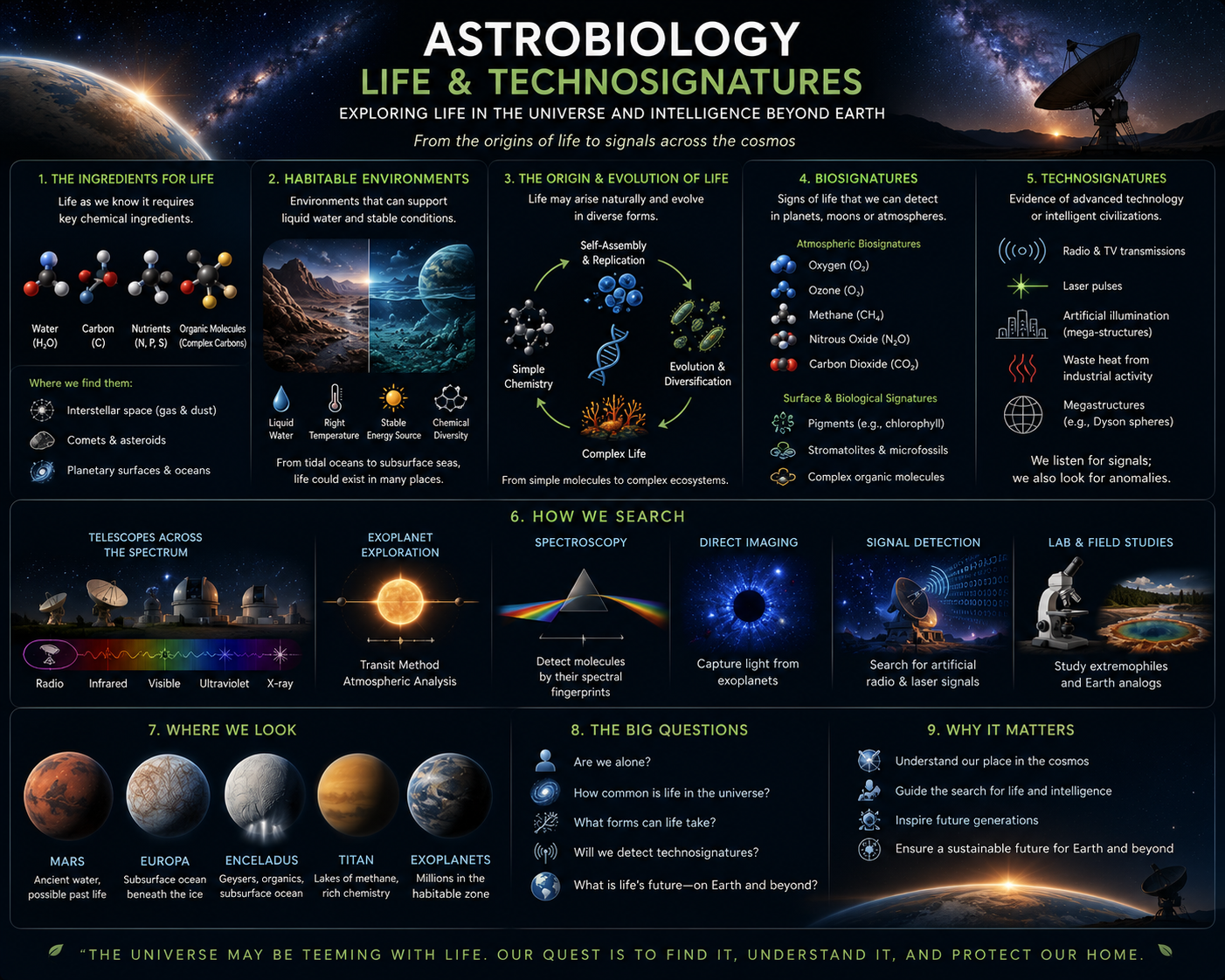
Evidence-driven searches for biosignatures and technosignatures, alongside rigorous study of the Fermi paradox and SETI questions.
Theoretical study of eternal inflation, bubble universes, many-worlds, the string landscape and mathematical models of possible cosmological structures.
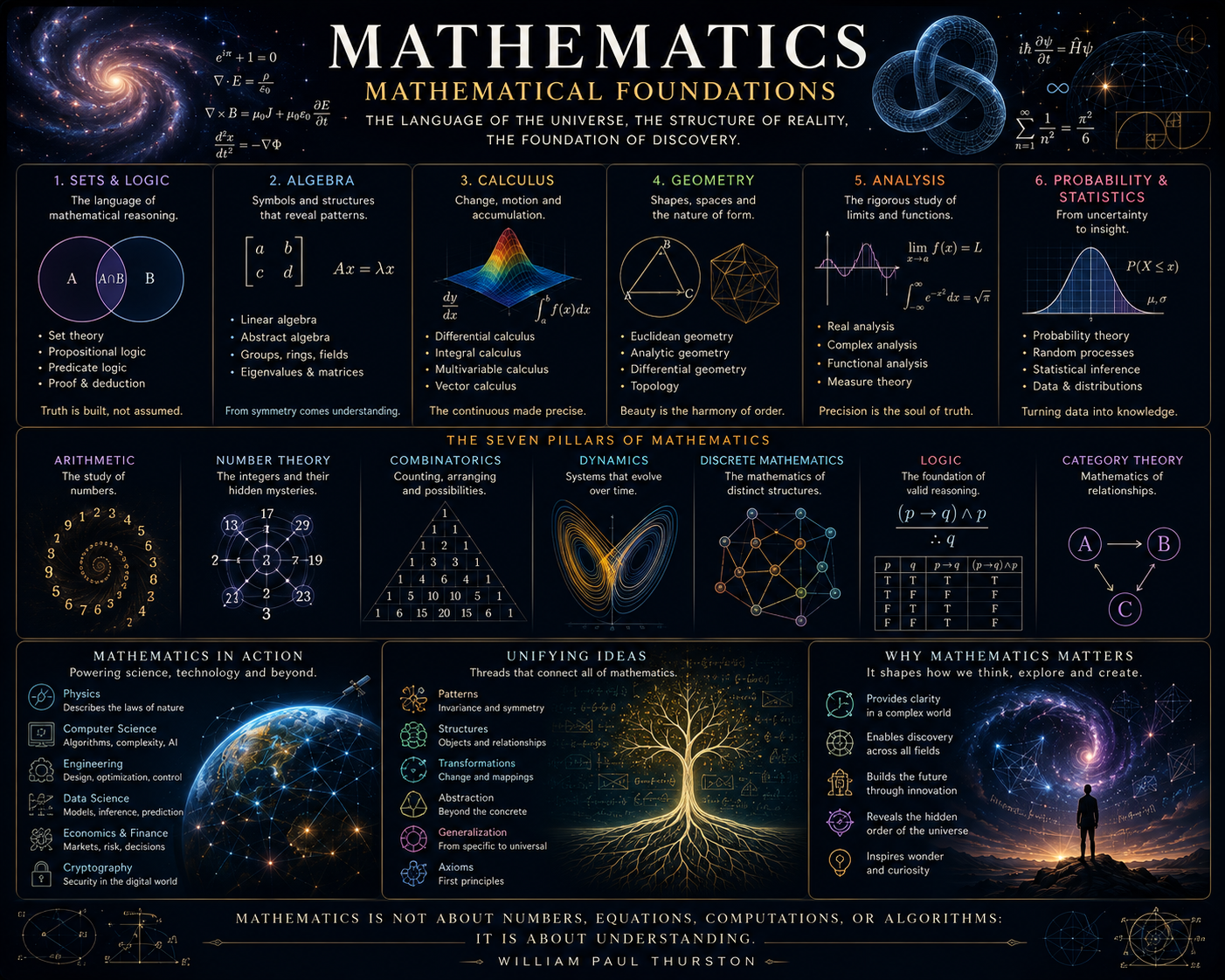
Algebra, geometry, trigonometry, calculus, differential equations, numerical methods and mathematical physics—from classical mechanics to relativity.
Beyond near-term space software, we are interested in the long arc of technological civilization: the Fermi paradox, SETI, technosignatures, artificial intelligence, planetary resilience and the Kardashev framework for thinking about civilization-scale energy and capability.
Advanced computation, energy systems, planetary science and technologies that strengthen civilization on Earth.
Long-term questions around interplanetary and interstellar expansion, autonomous systems and detectable stellar-scale engineering.
Theoretical exploration of mature technological civilizations, observational signatures and humanity's place in the cosmic story.
A long-term research and technology vision at the intersection of space, science, mathematics and computation.